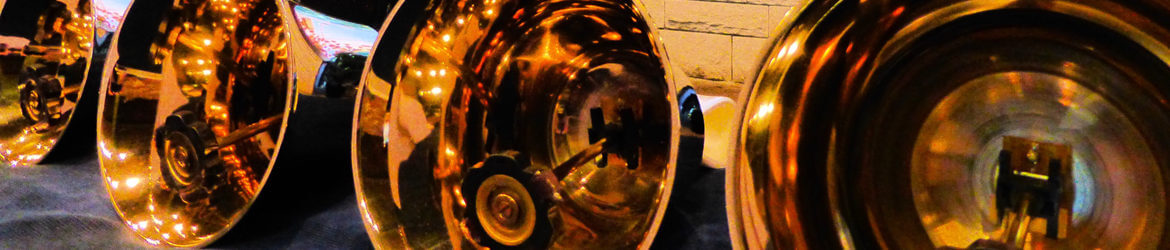
Our handbell choir arrangement Ye Jazzy Gentlemen has been crying out for the addition of a percussion part for a long time now, so we’ve (finally…) added one for cajón! Do take a look, and enjoy! MP3:
Tag: cajón
The cajón is a percussion instrument originating from 18th-century Peru. The literal translation of its name is "large box" (Spanish, "caja" = English "box", and the -ón suffix refers to a large whatever-the-noun-is).
A cajón is played by setting it on the floor and then sitting on it. The player's position should be off-center so that one heel is in position to damp the front playing face when needed. This posture also places the hands on the same body side as the damping foot is near the center of the face, and the other closer to the face edge opposite the damping foot.
A large variety of (hand) stroke types can be executed on cajón face. In general, striking near the center produces "bass-ier" sounds, and striking near the edge yields higher-pitched ones. Damping with the foot or keeping the hand on contact after the stroke shortens the sound, and releasing quickly allows for some sustain. Also, strikes on the side of the cajón can be played for a different sound.
Many cajónes have snare wires strung near the front face. When struck in front of the wires with sufficient force, the snare wires contact the inside of the face, producing a sound similar to a snare drum with its snare apparatus engaged.
As of the early 21st century, the cajón has become frequently-used by handbell ensembles.